Arromanches sits on the coastline that was designated as Gold Beach during the landings. This was the site for one of the two Mulberry harbors, the prefabricated military harbors that were built in England and towed across the English Channel in sections and assembled off the coast after the invasion. They comprised floating roadways and pierheads that went up and down with the tide.
"As we have no harbor at our disposal, we shall bring ours." —Lord Mountbatten
A few sections of the artificial harbor are still sitting on the sand and more can be seen out at sea.


Today Arromanches is mainly a tourist town. There’s a great permanent exhibition with information about the invasion and in particular the amazing Mulberry
harbors. This was the first museum to be built in commemoration of the Normandy Campaign. The D-Day museum overlooks the very spot where the Mulberry harbor was set up.


We also visited the Normandy American Cemetery and Memorial, and
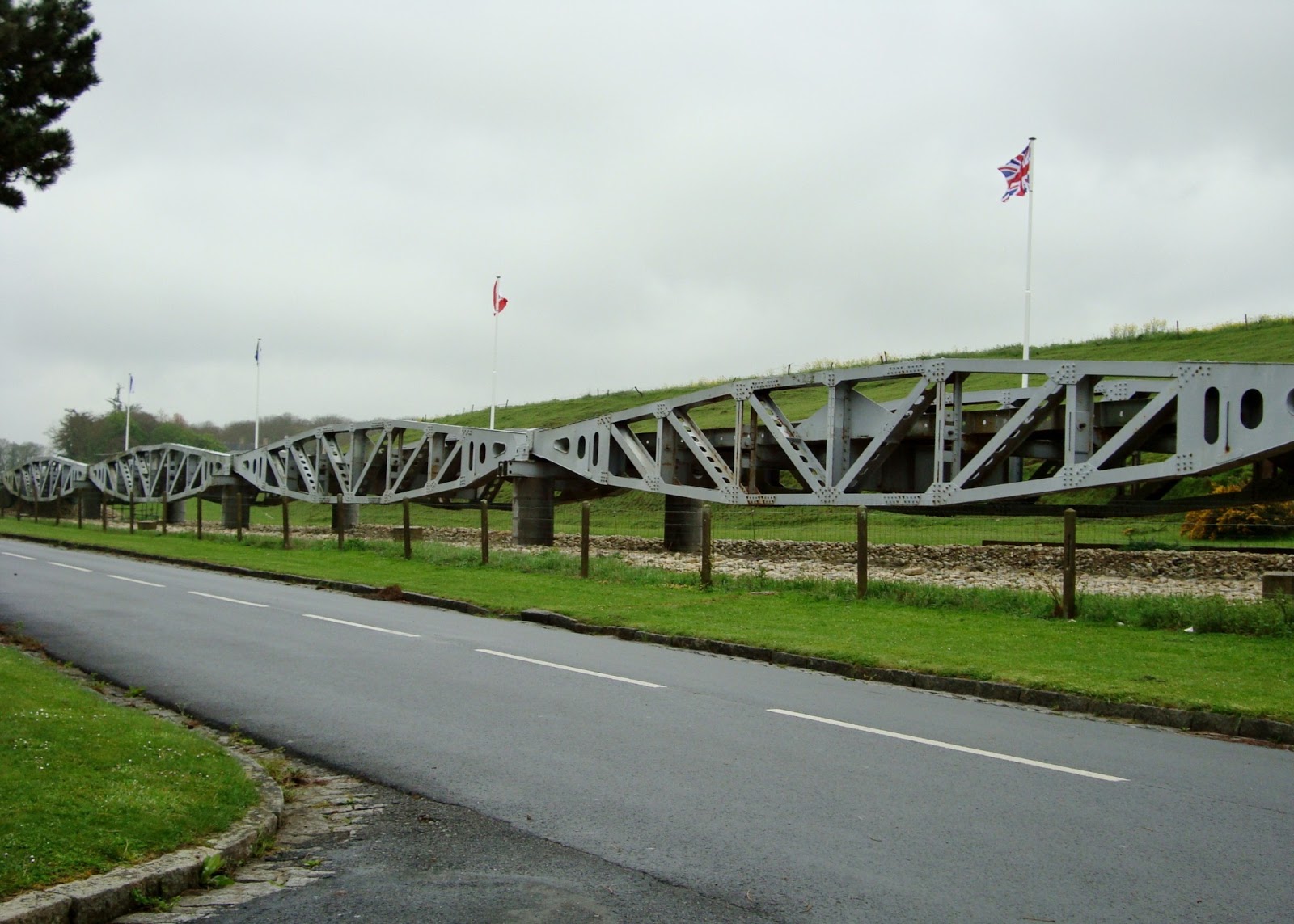
Omaha Beach, where they still have one of the old floating bridge pontoons. Although we've all seen these beaches and cliffs in films and photographs, it's a moving experience to be there in person and relive this incredible part of history.


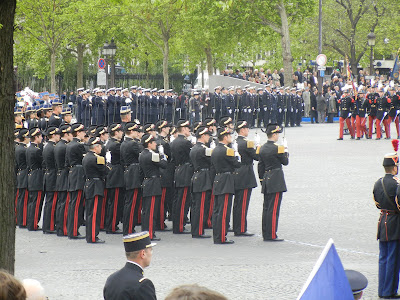
Quite appropriately, a few days later we saw the 8th of May Celebration of the Allied Victory over Nazi Germany. People danced in the streets that cheerful day in 1945. This year they put on a full show at the Arc de Triomphe, including a review of the troops by outgoing president Nicolas Sarkozy, a beautiful rendition of Hans Zimmer's "The Battle," and of course "La Marseillaise."



As we all know, the United States entered World War II after the attack on Pearl Harbor and it was indispensable to the Allies winning the war. A few times I have overheard US Americans in Paris (usually the obnoxious US tourist) brag about how they saved the French during World War II. But few Americans know or recognize how important France (and to a lesser extent Spain) was to the American revolution. The Americans faced impending defeat in the face of the overwhelming military power of the British army and navy. France provided money, troops, armament, gunpowder, military leadership and naval support, which tipped the balance of power in favor of the Continental Army and paved the way for its ultimate victory. When British General Cornwallis surrendered at Yorktown in 1781, his defeated troops marched through a corridor formed by the victorious forces. On the right side stood the Americans; on the left, the French (this scene was depicted in John Trumbull's 1820 painting "Surrender of Lord Cornwallis," which is on display in the US Capitol).


As we all know, the United States entered World War II after the attack on Pearl Harbor and it was indispensable to the Allies winning the war. A few times I have overheard US Americans in Paris (usually the obnoxious US tourist) brag about how they saved the French during World War II. But few Americans know or recognize how important France (and to a lesser extent Spain) was to the American revolution. The Americans faced impending defeat in the face of the overwhelming military power of the British army and navy. France provided money, troops, armament, gunpowder, military leadership and naval support, which tipped the balance of power in favor of the Continental Army and paved the way for its ultimate victory. When British General Cornwallis surrendered at Yorktown in 1781, his defeated troops marched through a corridor formed by the victorious forces. On the right side stood the Americans; on the left, the French (this scene was depicted in John Trumbull's 1820 painting "Surrender of Lord Cornwallis," which is on display in the US Capitol).


